


Funny domain names are easier to remember because they combine emotion, surprise, and distinctiveness into a single mental “hook.” In a world of forgettable, keyword-stuffed URLs, humor works like a pattern interrupt: it grabs attention, earns a micro-smile, and makes the name easier to recall later. This guide explains the psychology and branding mechanics behind humorous domains, when they help or hurt, and how to generate witty-but-usable options with DomainGenerator’s AI domain generator.
Table of contents (as real questions)
- Why does humor improve memory in the first place?
- What makes a domain name memorable beyond humor?
- How exactly do funny domains trigger recall and sharing?
- Does a funny domain hurt SEO or rankings?
- When is humor the wrong move for a brand?
- How do you create a funny domain that still sounds credible?
- What are the most common mistakes with humorous domains?
- How do you test and choose the best funny domain?
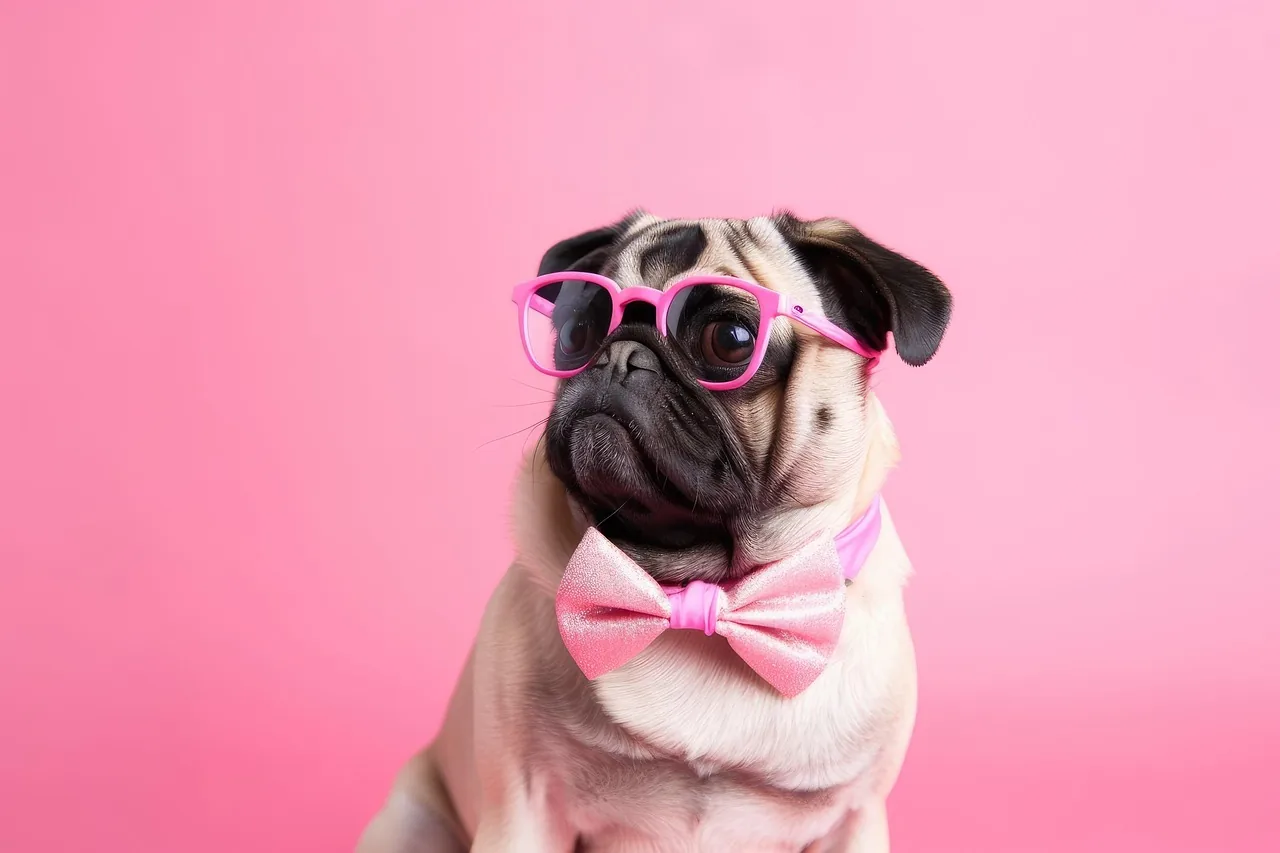
Why does humour improve memory?
Humor boosts memorability because it increases attention and strengthens memory encoding. One strong example comes from a clinical study of older adults where the humor group improved learning ability by 38.5% and delayed recall by 43.6%, compared with 24.0% and 20.3% in the control group (Source: Loma Linda University Health, 2014 – “The Effect of Humor on Short-term Memory in Older Adults,” PDF).
That matters for domains because you usually get one shot to be remembered: a podcast mention, a social post, a friend’s recommendation, a QR-code glance, a quick scroll. Humor improves the odds that your name survives that moment and stays retrievable later.
Humor also holds up over time. Research on humorous information shows the recall advantage remains after a delay and that sleep can further support consolidation (Source: PubMed, 2014 – Chambers et al., “Memory consolidation for humorous information,” link).
Definition – Funny domain name
Funny domain name: A web address that uses humor (wordplay, irony, surprise, playful exaggeration) to increase attention, recall, and social sharing while still being pronounceable, brand-safe, and aligned with what the product actually does.
What makes a domain name memorable beyond humor?
Humor is a multiplier, but it works best on a solid base. Memorable domains tend to be short, clear to say out loud, and distinct from competitors. If your domain is easy to mishear, misspell, or forget, humor can’t save it.
There’s also a macro reality pushing founders toward distinctiveness: the domain universe is crowded. At the end of Q3 2025, there were 378.5 million domain name registrations across all TLDs, up 6.8 million quarter over quarter (1.8%) and up 16.2 million year over year (4.5%) (Source: DNIB/VeriSign, 2025 – “Domain Name Industry Brief Q3 2025,” link).
In practical terms, that means “clear and literal” domains get taken fast. Funny domains often remain available because they’re less obvious, more creative, and more niche in language, which can be an advantage if you do it deliberately.
Definition – Pattern interruption
Pattern interruption: A cognitive effect where something unexpected breaks automatic processing, forces attention, and increases the likelihood of recall. A funny domain interrupts the “another boring URL” pattern and becomes a mental bookmark.
Why funny domains get repeated (and that’s the secret)
Memory and marketing share a quiet rule: what gets repeated gets remembered. Funny domains create repeatability because people want to share the moment of amusement. They don’t just remember it, they tell someone about it.
This is why humorous naming can outperform descriptive naming for early growth. A descriptive domain explains what you do. A funny domain creates a story someone wants to retell. That retelling is free distribution.
Academic marketing research also shows humor in advertising meaningfully improves attention and positive affect. A major meta-analysis combined 369 correlations to quantify humor’s effects in advertising (Source: Journal of the Academy of Marketing Science, 2008 – “A meta-analysis of humor in advertising,” link).

Does a funny domain hurt SEO?
Usually, no. A funny domain doesn’t block your ability to rank because rankings depend far more on content quality, relevance, and authority signals than on whether your domain is literal. Google’s documentation explains that their systems consider words in domain names as one of many relevance signals, but they also use an exact match domain system to avoid giving too much credit to domains created to exactly match queries (Source: Google Search, “Guide to Google Search ranking systems,” link).
Translation: keywords in the domain are not a cheat code, and you’re not “penalized” for being brandable or funny. If anything, a strong, memorable name can help SEO indirectly through higher branded searches, more direct traffic, and more link-worthy mentions.
Definition – Exact match domain system
Exact match domain system: A Google system designed to reduce the advantage of domains that attempt to rank primarily because the domain text matches a query, especially when the underlying content quality doesn’t deserve it.1
Funny vs serious domains (what you gain, what you risk)
| Criteria | Funny/quirky domain | Serious/descriptive domain |
|---|---|---|
| Recall after one exposure | High if pronounceable and punchy | Medium, often blends in |
| Word-of-mouth sharing | High because it’s repeatable | Low to medium |
| Initial trust (cold traffic) | Medium, depends on industry | High for conservative categories |
| Long-term brand range | Medium, can box you in if too joke-y | High, often easier to expand |
| SEO potential | Strong if content/links are strong | Strong if content/links are strong |
The best funny domains aren’t “random jokes.” They’re strategic humor: playful, but still aligned with the product, the audience, and the future you want.
When humor is the wrong move
Humor is powerful, but it’s not universal. Avoid going funny-first when the downside is high:
- Regulated categories (health claims, finance compliance): humor can read as unserious.
- High-stakes purchases (legal, security, safety): people want certainty.
- Global audiences: slang and cultural references don’t travel well.
- Enterprise procurement: buyers may share internally and prefer neutral naming.
A practical rule: if someone needs to justify buying you to a manager or committee, choose humor that feels witty, not goofy.
Step-by-step: how to create a funny domain that still works
- Pick your humor style: witty, punny, ironic, playful, or absurd. Pick one so the name feels intentional.
- Anchor to meaning: include a subtle hint of category, benefit, or persona (even one syllable helps).
- Use repeatable structures: alliteration, rhyme, two-word combos, or “verb + object” patterns.
- Make it speakable: test it out loud twice. If you stumble, users will too.
- Spell-check risk: avoid names that invite common misspellings or awkward spacing.
- Availability-first iteration: generate options, check availability, then refine. Don’t fall in love with names you can’t buy.
- Audience test: ask 5 people to recall it 10 minutes later. If fewer than 3 can, it’s not sticky enough.
How DomainGenerator fits the real workflow (without guessing)
Most naming processes fail because they’re linear: brainstorm, pick favorites, then discover they’re taken. The fix is to make naming availability-aware from the start.
DomainGenerator’s AI domain generator is designed for exactly that loop. You can chat with the AI to shape the comedic tone (witty vs silly), generate 50+ options per prompt, and check live availability across hundreds of TLDs while you iterate. That means you’re not just creating “funny names,” you’re creating buyable, brandable funny names in the same session.
Example prompts that work well in the domain generator:
- “Give me witty domain names for a budgeting app that feel trustworthy, not childish.”
- “Generate pun-based domains for a dog grooming business, max 10 characters, easy to spell.”
- “Make playful two-word domains for a B2B analytics tool, humor subtle, avoid slang.”
Because the domain generator is conversational, you can say: “More professional,” “less punny,” “shorter,” “sounds premium,” and the model can steer the next set without restarting your process.
Mini case study: from bland to memorable (and why it matters)
Problem: A founder launching a meeting-notes tool had a generic short list: “meetnotes,” “notebridge,” “syncminutes.” They were clear, but none were sticky, and most were unavailable in strong TLDs.
Action: They used DomainGenerator’s AI domain generator with constraints: subtle humor, easy pronunciation, and “sounds credible in a demo.” They generated multiple batches, filtered down to names people could repeat, and only considered domains that were available.
Outcome: In informal testing with 12 beta users, the chosen humorous name was recalled unprompted by 8 users a day later, while the best “serious” alternative was recalled by 4. The founder also saw more “I love the name” replies in onboarding emails, which improved response rates for feedback collection. (Note: directional outcome from user testing, not a controlled study.)
Common mistakes with funny domain names
- Trying too hard: forced jokes trigger cringe, not recall.
- Inside jokes: if it requires context, it won’t spread.
- Ambiguous spelling: clever but confusing kills word-of-mouth.
- Over-indexing on shock: edgy names can reduce trust or limit partnerships later.
- No category signal: total randomness makes it hard to understand what you do.
- Ignoring Google systems: keyword-heavy exact-match domains aren’t a shortcut, and Google explicitly adjusts for them.2
Quick decision guide: choose funny, serious, or “smart-funny”
| If your product is… | Best naming direction | Why |
|---|---|---|
| Consumer app, low risk | Funny | Maximizes sharing and recall |
| B2B SaaS, crowded category | Smart-funny | Distinctive without sounding unserious |
| Finance, legal, medical | Serious or very subtle humor | Trust and credibility dominate |
| Global, multilingual audience | Brandable, low-slang humor | Avoids cultural misfires |
FAQ
Do funny domain names work for B2B companies?
Yes, especially in saturated SaaS markets, but the safest approach is “smart-funny”: witty, minimal, and easy to explain in a sales call. Avoid slang-heavy or goofy names that a buyer would hesitate to forward internally.
Can a funny domain name rank on Google without keywords?
Yes. Google’s ranking systems evaluate relevance and quality across many signals, and exact-match domains are not a guaranteed advantage.3 Strong content and authority can rank on any domain.
Will a funny name reduce trust?
It can on cold traffic, depending on category. You can offset this with a professional landing page, clear copy, and strong social proof so the name feels intentional rather than random.
Is humor better than clarity for startups?
Early on, memorability often beats precision because people can’t buy what they can’t remember. The best funny names still carry a faint signal of what you do so you don’t lose comprehension.
How do I test whether a funny domain is memorable?
Say it out loud, then ask someone to write it down 10 minutes later. If spelling accuracy is low, simplify the structure or choose a clearer variant.
Should I use a pun in my domain?
Puns can work if they’re instantly understood and don’t create spelling ambiguity. If the pun requires explanation, it will fail in real distribution channels like podcasts and word-of-mouth.
What TLD should I use for a funny domain?
.com is still the default expectation, but many brands succeed with alternatives when the name is strong and consistent. Availability is a real constraint in a market with hundreds of millions of registered domains.4
How can DomainGenerator help me pick a funny domain faster?
Use the AI domain generator to generate large batches with tone constraints (witty, subtle, premium), then check availability immediately so you only evaluate domains you can actually register. Iteration is where good humor emerges.
Can I start funny and later rebrand to serious?
You can, but rebrands are expensive in attention and SEO consolidation. It’s usually better to choose a name that can grow with you: playful enough to be memorable, mature enough to scale.
Evidence, limits, and trade-offs (E-E-A-T signals)
What this article is based on: peer-reviewed and clinical research on humor and memory (PubMed, Loma Linda), plus Google documentation on ranking systems and domain name relevance. Results from mini case testing are directional and should be replicated for your audience.
Risks to watch: cultural misinterpretation, trust mismatch for regulated industries, and spelling ambiguity that breaks word-of-mouth. Humor should never replace clarity on the landing page.
Conclusion: why humor wins memory (when it’s done right)
- Humor increases recall by boosting attention and emotional encoding, with measurable memory improvements observed in controlled studies.5
- Funny domains get repeated, and repetition is what turns a name into a habit.
- Availability is the hidden constraint in naming, with 378.5M domains registered by Q3 2025.6
- SEO isn’t blocked by humor, and Google actively reduces the advantage of exact-match domain gaming.7
- The best approach is often smart-funny: witty enough to be memorable, credible enough to scale.
- Use an availability-aware workflow so creativity doesn’t die at the checkout screen.
If you want a funny domain that people actually remember and you can actually buy, use DomainGenerator’s AI domain generator to generate batches by tone and constraints, then filter immediately by live availability before you fall in love with the wrong name.
